
Nga qëllimi në Nikah: Njohja e flamujve të kuq në martesën islame
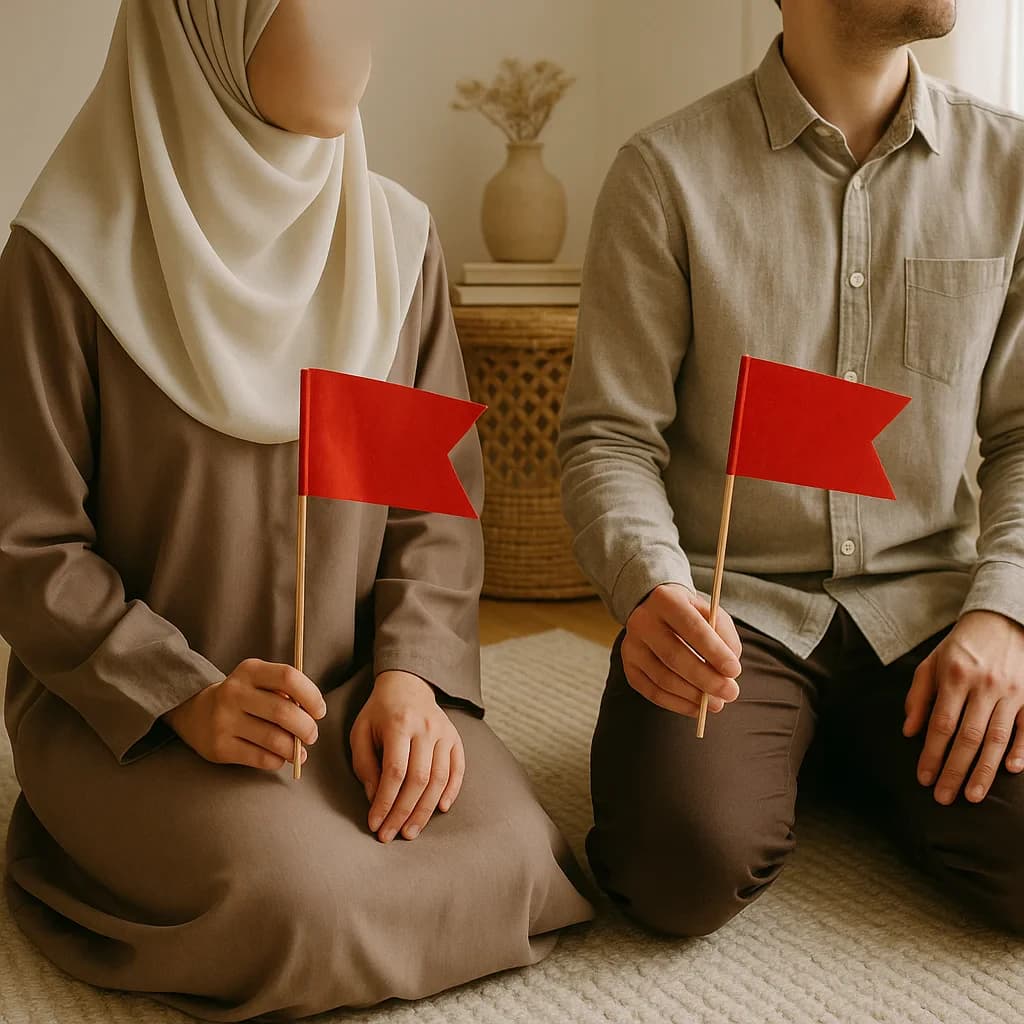
From Intention to Nikah: Spotting Red Flags in Islamic Marriage
Introduction: What NOT to Do in Your Quest for Marriage
Rushing into a relationship without proper discernment can lead to avoidable heartache. Many overlook critical signs that may indicate future challenges, often prioritizing attraction over genuine compatibility. This approach can result in a marriage fraught with difficulties.
Red flags in Islamic marriage refer to concerning signs of behavior, values, or attitudes in a potential spouse that may indicate future challenges, as advised by Islamic teachings on marriage.
Step 1: Recognizing Warning Signs in Behavior
Observe how your potential spouse treats others, especially family and friends. A person’s treatment of those around them often reflects their true character. Look for patterns of disrespect, issues with anger management, or a tendency to blame others. These warning signs may be indicative of future behavior in your relationship.
Step 2: Assessing Compatibility in Deen
Understanding each other’s level of commitment to Islamic principles is vital in forming a strong foundation. Discuss your views on religious obligations, practices, and values. Important topics include prayer habits, the significance of halal living, and shared goals regarding family and faith. This ensures that both partners can support each other in maintaining a strong connection with Allah.
Key takeaway: Recognizing red flags early can pave the way for a more harmonious and fulfilling Islamic marriage.
Step 3: Prioritizing Character Over Physical Looks
While attraction is naturally important, it should not overshadow character. Prioritize qualities such as kindness, honesty, and reliability over physical appearance. The Prophet Muhammad (peace be upon him) emphasized character in his teachings. Building a relationship on character ensures a deeper, more meaningful connection.
Step 4: Open Communication
Ensuring that both partners can communicate openly is essential. Discuss personal expectations, values, and aspirations early on. Honest communication can prevent misunderstandings and resentment, transforming small issues into larger problems.
Step 5: Seeking Guidance from Family and Mentors
Involve family or trusted mentors in your journey towards marriage. They can provide valuable perspectives and may observe red flags that you might overlook. Their wisdom can be invaluable in helping you assess the character and suitability of your prospective spouse.
Incorporating family guidance aligns with the Islamic principle of maintaining strong community ties, building an environment of support and accountability.
Mistakes to Avoid for a Healthier Union
- Ignoring gut feelings about troubling behaviors.
- Believing that love alone can overcome significant differences in values.
- Neglecting to discuss finances, family planning, and child-rearing beliefs.
- Focusing solely on chemistry rather than compatibility.
Conclusion: Your Checklist for a Thoughtful Approach
As you handle your journey to find a spouse, keep this checklist in mind:
- Are you aware of any concerning behaviors?
- Have you discussed your compatibility in deen?
- Are you prioritizing character over looks?
- Is open communication established?
- Have you sought advice from family or mentors?
By being proactive in spotting red flags in Islamic marriage, you lay the groundwork for a fulfilling, blessed union. For further guidance, consider resources available at GoodSpouse, which can help you handle this important journey.
Related Reading
- Handling Your Nikah: The Role of Wali in Muslim Marriage
- Adab of the Husband with His Wife in Islam vs Casual Dating Apps
Quick Answers
What are common red flags to look for in a potential spouse?
Common red flags include dishonesty, lack of respect for family, unwillingness to compromise, and dismissive attitudes towards religious practices. Identifying these traits early can help you align with a more compatible partner.
How important is character in an Islamic marriage?
Character is paramount in an Islamic marriage as it strongly influences how spouses treat each other. The Prophet Muhammad (peace be upon him) emphasized that the best among Muslims are those with the best character.
Ready to look for a righteous spouse? Install GoodSpouse: https://goodspouse.com/go/en
Artikuj të lidhur

Arti i të shprehurit të dashurisë dhe dashurisë në martesë: Islami
Arti i të shprehurit të dashurisë dhe dashurisë në martesë: Perspektivat dhe praktikat islame Martesa në Islam është një lidhje e shenjtë që ushqehet përmes dashurisë, dhembshurisë dhe mirëkuptimit. Mënyra se si ne eksplorojmë...

Lundrimi i intimitetit dhe romancës në martesë: Balancimi i moderit
Lundrimi i intimitetit dhe romancës në martesë: Balancimi i pritshmërive moderne me parimet islame Martesa është një lidhje e shenjtë në Islam, që përfshin jo vetëm angazhimin dhe shoqërimin, por edhe intimitetin...
Lundrimi i intimitetit: Një perspektivë islame për ndërtimin e emocioneve
Lundrimi i intimitetit: Një perspektivë islame për ndërtimin e lidhjes emocionale dhe fizike në martesë Martesa është një lidhje e shenjtë në Islam, ku intimiteti emocional dhe fizik luan një rol jetik në...
Kuptimi i gjuhëve të dashurisë në martesë: Rritja e intimitetit
Kuptimi i gjuhëve të dashurisë në martesë: Rritja e intimitetit dhe e komunikimit brenda një kornize islame Martesa është një lidhje e shenjtë e caktuar nga Allahu, ku dy individë bashkohen për të përmbushur h...
Arti i të shprehurit të dashurisë në martesë: Kuptimi i Është
Arti i të shprehurit të dashurisë në martesë: Kuptimi i perspektivës islame mbi romancën dhe intimitetin Martesa, në Islam, nuk është thjesht një kontratë ligjore, por një lidhje e shenjtë e mbushur me dashuri, dhembshuri, një...