
Van intentie tot nikah: vragen om te stellen vóór een moslimhuwelijk

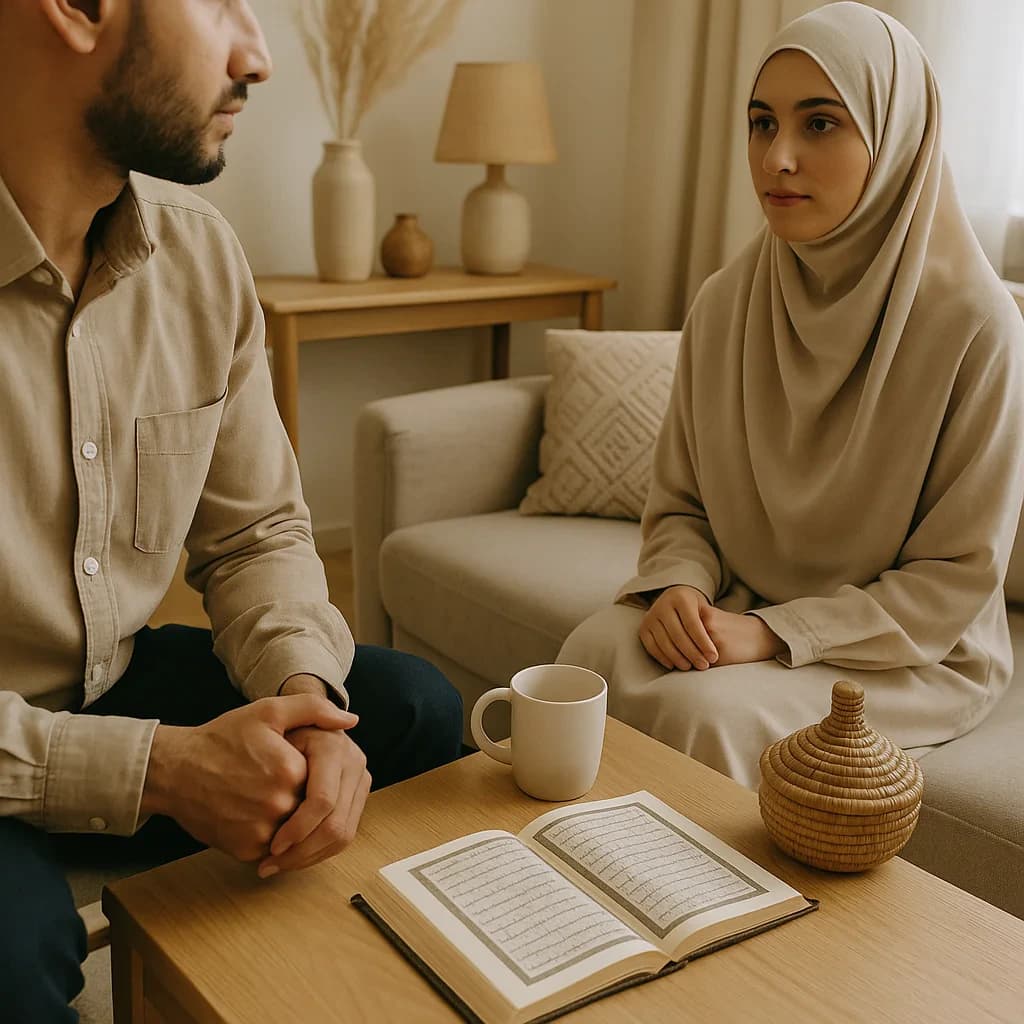
We often assume that shared cultural backgrounds, identical university degrees, and matching political views mean a couple is ready for a lifetime commitment. Yet, modern matchmaking reveals a striking reality: many engagements dissolve over minor domestic frictions that could have been identified months prior. When two people sit down to explore questions to ask before muslim marriage, they frequently stick to safe, abstract ideals rather than exploring day-to-day realities. A marriage is built in the kitchen, over monthly utility bills, and during moments of exhaustion—not just during polite cafe meetings.
Questions to ask before muslim marriage are purposeful inquiries framed by Islamic adab that help prospective spouses evaluate religious, financial, and emotional compatibility prior to committing to a nikah.
Consider a realistic scenario involving two sincere individuals, Rayan and Amina. They met through family introductions, bonded over shared Islamic values, and agreed on major life goals. Both recited poetry, valued community service, and prayed regularly. However, within weeks of signing their contract, friction emerged. Rayan assumed Amina would manage all domestic cooking because his mother did, while Amina expected a shared chore roster based on her upbringing. They had discussed loving Islam, but they had never discussed the actual mechanics of running a household with prophetic adab. Their story illustrates why moving past surface charm is vital when curating your halal marriage alignment checklist.
Key takeaway: True premarital alignment requires looking past surface similarities to understand how a potential spouse handles financial duties, religious practice, and conflict according to the Sunnah.
From intention to nikah: questions to ask before muslim marriage
The transition from single life to building a home requires intentional dialogue. To help you structure a serious marriage conversation, let us examine how specific areas of life demand practical scrutiny long before the wedding day arrives.
Uncovering actual financial adab beyond basic salary discussions
Money is rarely just about numbers; it reflects values, anxieties, and priorities. Asking someone if they have a job is insufficient. You need to understand how they view qiwamah, debt, savings, and generosity. Does a potential partner view financial contribution as a partnership or a strict ledger? Discussing your expectations regarding the mahr, household budgets, and spending habits establishes trust early. If you want to explore deeper relationship tools for your journey, you might also look at digital platforms like GoodSpouse features that help couples manage halal compatibility from the start.
Aligning on daily worship rhythms, Islamic education, and spiritual goals
We all appreciate the beauty of attending lectures together or fasting during Ramadan. But true religious compatibility reveals itself in the mundane hours. How does your potential spouse handle dawn prayers when they are sleep-deprived? What is their approach to continuous Islamic learning within the home? Discussing how you both intend to cultivate an environment of ihsan—excellence and spiritual mindfulness—helps ensure your home remains a sanctuary rather than a source of fatigue.
Setting clear boundaries regarding extended family and domestic roles
Many marital disputes stem from unspoken assumptions about family involvement and household labor. A comprehensive approach to premarital inquiry means asking how decisions are made when extended family opinions clash with spousal harmony. Clarify expectations around hosting relatives, financial support for parents, and division of labor. Understanding these boundaries protects the privacy and emotional well-being of the new household, aligning with the adab taught by the Prophet Muhammad (peace be upon him) regarding mutual respect and fairness.
Discussing conflict resolution styles through the lens of Sunnah patience
Related reading- Stop Guessing: A Guide to Mutual Rights in Muslim Marriage
- How to Prepare for Muslim Marriage Malaysia: A Practical Guide
Common questions Muslims ask
What are the most crucial topics to cover before a nikah?
Prioritize discussions on daily religious practice, financial responsibilities, conflict resolution methods, and expectations regarding extended family involvement. Grounding these talks in the Quran and Sunnah ensures you build a marriage on mutual rights, clear duties, and sincere intentions.
How can I ask deep compatibility questions without making it feel like an interrogation?
Frame the conversation around shared values and real-life scenarios rather than rapid-fire queries. Share your own perspective first, invite your potential spouse to reflect on classical Islamic manners, and involve a wali or trusted chaperone to keep the dialogue respectful and secure.
Are there specific red flags to watch out for during premarital talks?
Watch for dismissive attitudes toward your rights, dishonesty regarding financial obligations, or a refusal to involve family and proper channels. True Islamic compatibility values transparency, mutual consultation, and respect for individual boundaries established by our faith.
Next step: create a sincere profile on GoodSpouse and involve your family early.
Gerelateerde artikelen
Wat moderne moslims moeten weten over het bekijken van de verloofde
Navigeer door de belangrijke praktijk van het bekijken van je verloofde voor het huwelijk in de islam. Ontdek belangrijke adab en inzichten met onze praktische gids!
Stop met raden: Een gids voor wederzijdse rechten in het moslimhuwelijk
Beheers de wederzijdse rechten van echtgenoot en echtgenote aan de hand van de Koran en de Soennah met deze praktische stapsgewijze gids. Bouw vandaag nog een evenwichtige nikah op.
Voorbereiden op een moslimhuwelijk in Maleisië: Een praktische gids
Beheers de lokale koppeltradities, familiebetrokkenheid en religieuze vereisten voor een gezegende nikah in Maleisië. Bouw vandaag nog aan je toekomst met GoodSpouse.

Moslimhuwelijk Saoedi-Arabië: Een Meelevende Gids
Navigeer de reis naar het vinden van een moslimpartner in Saoedi-Arabië met onze meelevende gids. Ontdek hoe GoodSpouse je kan helpen om opnieuw te beginnen!

Een Kalm, Halal Benadering om Overeenstemming te Bereiken over de Mahr voor de Nikah
Ontdek praktische stappen over hoeveel mahr overeen te komen voor de nikah. Leer op een elegante manier mahr te bespreken met familie en zorg voor een soepele start van je huwelijk.